
NASCAR Gen 4 at Dover — Fixed Setup Race Strategy
Have more questions? Ask us in the DiscordQuick summary
Dover in the Gen 4 Cup cars is a high‑commitment, high‑risk combo: a bumpy, concrete, one‑mile, high‑banked oval with an old‑school, high‑power, low‑downforce stock car that will happily bite you for every small mistake. The skills that matter most are entry discipline, mid‑corner patience, and ultra‑smooth throttle on corner exit to protect the right‑side tires. iracing.fandom
Fast drivers separate themselves by braking earlier but harder, rolling more consistent minimum speed, and protecting the right‑front and right‑rear over a run instead of chasing outright peak pace for two laps. The main keys to lap time and race consistency are: stable entry (no dive‑bombing the turn), letting the car float to the middle lane on exit instead of pinching, and managing the line so you can keep the car underneath you in traffic for the full stint. app.tracktitan
Car overview: Gen 4 Chevrolet Monte Carlo / Ford Taurus 2003
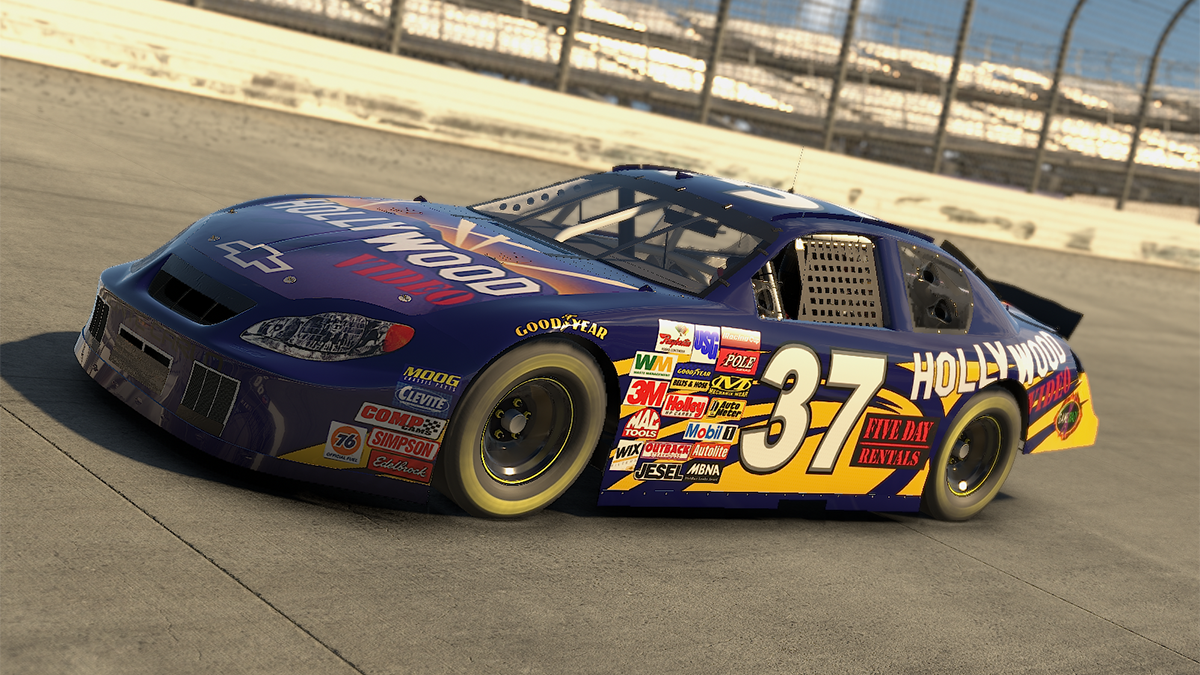
These Gen 4 Cup cars are heavy, front‑engine, rear‑wheel‑drive stock cars with big power, relatively low aero downforce (compared to modern Next Gen), and a strong reliance on mechanical grip. They accelerate hard enough that throttle modulation out of tight, banked corners like Dover’s is critical to prevent wheelspin and rear‑end snap, especially as the run goes on and grip falls away. facebook
Braking behavior is very “mechanical”: no ABS, long pedal strokes, and big weight transfer to the front; you must modulate pressure as speed drops because there’s less downforce and tire load later in the stop. The tires will easily lock if you stab the pedal, especially the unloaded inside tires when you turn while still braking, so the car rewards a strong initial hit followed quickly by a smooth trail off as you bend it into the banking. ir-core-sites.iracing
Most of the grip comes from the tires and suspension rather than aero, so driving style changes the balance a lot: aggressive entries make the car tight center‑off (“push‑loose”), while patient entries let the car rotate and stay stable on exit. Tires overheat quickly if you slide them, and Dover’s concrete plus sustained lateral load makes right‑front and right‑rear wear and temperature the core limiting factors over a stint. brakinglab
Common handling traits you’ll see in the fixed set at Dover (based on similar Gen 4 guidance and typical iRacing ovals) are:
- Tight on entry if you roll into the corner too fast or brake too late.
- Neutral‑to‑free on exit if you abuse the right‑rear with throttle or try to hold too low of a line under power.
- Increasing push mid‑corner as the run develops, especially if you were too aggressive early and overheated the RF. dailydownforce
The mistakes this car punishes most:
- Over‑braking or braking while yanking the wheel, causing inside front lockup and a straight‑on push into the wall.
- Snapping loose on exit when you go to full throttle too early or while still unwinding steering.
- Riding the apron transition or clipping the inside curb hard, which unloads the car and starts a tank‑slapper.
(If iRacing exposes in‑car brake bias for this car – it usually does for NASCAR stock cars – that is your main legal adjustment; see the fixed‑setup section for how to use it.)
Track overview: Dover Motor Speedway
Dover is a 1‑mile, high‑banked, concrete oval with four corners but really two identical corner complexes: Turns 1–2 and Turns 3–4. You drive down into the corners off a “drop” from the straights into the banking, then climb back out onto the straight again, which makes entry transitions and exit wall proximity the defining features of the lap. brakinglab
Key characteristics from the driver’s seat:
- Layout and rhythm: Short straights, long, fast, high‑banked corners; the car is always loaded, which means your rhythm across entry–center–exit is more important than single‑corner heroics. brakinglab
- Passing zones: The main passes happen into Turn 1 and Turn 3 (entry) and occasionally off Turn 2 and Turn 4 if you get a better exit; slide jobs are possible but risky in fixed racing due to balance variation across splits. brakinglab
- Heavy braking: Compared to superspeedways this is a “short track,” so you lift and often brake for both ends, but it’s not a Martinsville‑style full‑stop zone; think controlled deceleration, then roll. brakinglab
- Technical sections: The trickiest parts are the entry drop into Turn 1 (car feels light and can wash up), and exit of Turn 2, where the wall comes at you much faster than you expect. app.tracktitan
- Danger zones: Exit of Turn 2 and Turn 4 (right‑rear spin, wall contact), and the apron transitions on both entries, especially in traffic or on cold tires. iracing.fandom
Track limits are mostly the walls – there are no generous runoff areas – and the inside apron is not a place you want to touch with loaded rear tires. Curbs are minimal; the time is gained by using the banking and concrete surface effectively, not by hopping kerbs. What matters most for lap time is combining: app.tracktitan
- Early, controlled braking into both ends.
- A late enough apex that you can straighten your hands early and commit to throttle.
- Consistent exits that keep you out of the wall while preserving the right‑side tires. app.tracktitan
Beginner tips
For newer iRacers, surviving and building consistency comes before chasing absolute pace.
Surviving the opening lap
- Start conservatively: brake 1–2 car lengths earlier than you think into Turn 1 on lap 1.
- Expect cold tires and a heavy field; don’t dive below cars unless the gap is unquestionable.
- Hold a lane (preferably middle or high), and avoid last‑second line changes on the straight.
Safe braking
- Use a clear visual marker (e.g., a seam, shadow, track lettering, or a safer‑bar joint) on the wall to trigger your initial brake lift; start with an early, gentle brake and move it later as you gain confidence.
- Press the brake smoothly; avoid “stabbing” the pedal, which upsets this heavy car and leads to understeer or wheel lock. brakinglab
Avoiding overdriving
- If you’re frequently washing up to the wall mid‑corner, your entry is too fast – lift earlier, brake slightly more, and accept a slower corner entry speed.
- Prioritize a clean exit; a safe exit at 90% speed is faster over a lap than a heroic entry that ruins your run down the straight.
Learning the racing line
- Start with a conservative “diamond” line: enter a half‑lane up from the white line, arc down to a mid‑to‑late apex, and let the car float to within a car‑width of the outside wall on exit.
- Watch a Dover guide for Cup A‑fixed; the approach and arc will be very similar in the Gen 4. youtube
Managing traffic
- Mirror awareness: glance down the straight, not mid‑corner, to see runs coming.
- If faster cars arrive, hold your line and give them a predictable lane; lifting slightly on the straight rather than slamming brakes in the corner is safer.
Reducing incidents
- Stay off the apron on entry and exit; treat the seam as a “do not cross” line while loaded.
- Leave extra margin to the wall on exits until you are completely confident with the car’s lateral slide.
Building consistency
- Aim for a 10‑lap run where every lap’s line and inputs feel similar, even if they are slow.
- Once your laps are within about 0.5–0.8s of each other (don’t worry about absolute time yet), then start gently moving braking later and getting to throttle earlier. youtube
Corner‑by‑corner driving guide (Dover)
Note: exact brake points and gearing will vary with build, weather, and how iRacing has currently tuned Gen 4 car speeds; use these as starting‑point references and adjust to your own pace. Refer also to general Dover track‑guide content (mostly Cup/Truck) for visual cues; the driving principles transfer well. support.iracing
Front straight & Turn 1 entry
Approach & marker
- You exit Turn 4 against or near the wall, build speed across the front stretch, and aim for a fairly straight run into Turn 1.
- Use a visual on the wall or the start/finish area as a reference; many drivers lift or brake just past the start/finish line in heavy cars, then refine. youtube
Braking & turn‑in
- Lift off throttle a split‑second before your braking marker, then smoothly add brake – about medium pressure initially, then trailing off as you tip into the banking.
- Begin turn‑in just as you feel the car “fall” into the banking; avoid turning hard while still at maximum brake.
Line & apex
- Enter about half a lane up from the white line.
- Bring the car down to a late apex roughly ⅔ of the way through the corner, clipping the lower groove but staying off any painted apron.
Throttle & exit
- Start easing back into throttle before the apex, at first around 20–30%, and build as you unwind the wheel.
- Let the car drift out naturally toward the wall; avoid pinching it tight to the bottom on exit, which stresses the right‑rear.
Common mistakes & time gains
- Mistake: Diving too deep and washing up the track middle‑corner, forcing a lift and killing exit speed. Fix: brake earlier and shorter; aim for a stable, rotating center.
- Mistake: Getting to full throttle too early while still turning, causing snap oversteer and wall contact. Fix: “shape” the throttle – small increase, hold, then another increase as the wheel straightens.
- Safe in traffic: If you’re inside another car, accept a slower corner; roll speed on the bottom and prioritize not sliding up into them.
Turn 2 exit & back straight
Focus points
- Turn 2 exit is where many wrecks start; the wall closes in faster than Turn 4 and the car can feel light as you crest back onto the straight. iracing.fandom
- Keep a tiny bit of margin between your car and the wall until you’re fully straight; you don’t need to “kiss” the wall every lap to be fast.
Throttle & line
- Stay smooth and progressive on throttle; if you feel the rear getting loose, hold throttle instead of snapping off it, and correct gently.
- Use the middle groove in early runs to stay away from the worst marbles and trouble in traffic.
Turn 3 entry & Turn 4 exit
Turn 3/4 is similar but not identical to 1/2; visually it may feel tighter or more intimidating.
Approach & marker
- Use a wall joint, safer‑bar seam, or the end of back‑straight billboards as an initial brake reference; again, start early and move later.
- Because the race line often widens here, expect more variability in others’ braking points.
Braking & turn‑in
- Apply brake smoothly, slightly less than Turn 1 initially, and trail into the corner.
- Start turn‑in a bit later than you think; rolling in too early pins you on the bottom and hurts exit.
Line & apex
- Aim for a similar late apex, but be ready to compromise if you’re racing side‑by‑side; the middle lane can still be quick.
- Do not drop tires onto the apron; the transition unsettles the car, especially under trail brake.
Throttle & exit (Turn 4)
- Begin throttle application a little earlier than you think but with a very gentle foot.
- Let the car open up to within a car width of the wall; Turn 4 wall contact is the classic end‑of‑run mistake as the car tightens up.
Common mistakes & time gains
- Mistake: Over‑slowing mid‑corner and then “panic‑throttling” to make up time, which overheats the right‑rear. Fix: target a consistent, slightly higher minimum speed with more gradual throttle.
- Mistake: Getting trapped behind slower traffic on the bottom and over‑driving entry. Fix: either commit to running the bottom properly or take the high lane and accept slightly slower but safer laps.
Advanced driving techniques
For accomplished drivers trying to extract those last tenths, Dover in a Gen 4 car is about managing weight transfer and tire load with nuance. dailydownforce
Trail braking
- Apply strong initial brake in a straight line, then bleed off pressure as you begin turn‑in so that by apex you are off brake entirely.
- The goal is to keep just enough weight on the nose to help the car rotate into the banking without overloading the RF and scrubbing. iracing
Rotation management
- If the car is tight on entry, increase your trail‑brake duration slightly (but not the peak pressure) to keep the front tires engaged a bit longer.
- If the car is snappy on entry, release brake earlier and rely on a slightly higher entry line and smoother steering to add rotation instead.
Minimum vs. exit speed
- A small sacrifice in minimum speed for a straighter, earlier throttle exit pays off hugely down each straight.
- Think: “short brake, firm rotation, early drive” rather than “deep brake, hang mid‑corner, late panic throttle.”
Throttle shaping
- Instead of “off–on” throttle, think three phases: initial pick‑up (10–30%), consolidation (hold while the car settles), expansion (60%+ as you straighten the wheel).
- You can safely be slightly earlier on throttle with a higher line because the banking supports the rear better.
Weight transfer use
- You can subtly “set” the car by a tiny lift before turn‑in, letting the front bite, then catching it with a concise trail‑brake.
- Avoid combining big steering changes with big brake/throttle changes; always move one control at a time when near the limit.
Managing understeer
- Use a slightly earlier lift, a tad more trail brake, and a later apex to improve initial rotation.
- If the front is greasy mid‑run, move up half a lane to reduce RF load; the high line can be more consistent over long stints. app.tracktitan
Managing oversteer
- Open your hands earlier on exit and prioritize keeping the car a bit lower off the corner, then let it drift out gradually.
- Soften your initial throttle hit and be willing to accept 2–3% less throttle for half a second at exit to prevent a slide that overheats the RR.
Identifying where time is lost
- Use iRacing’s delta bar or VRS/Track Titan/telemetry to compare your speed trace: look for big dips in minimum speed or large spikes in steering angle mid‑corner. youtube
- If a faster ghost pulls away mostly between the centers of the corners and the next apex, it means they are getting better exits, not necessarily braking later.
Telemetry & ghost laps
- Load a fast ghost or AI lap (once iRacing AI support for Gen 4 is fully in) and overlay your lap via third‑party tools like VRS, Track Titan, or iSpeed; note your brake‑release timing vs. theirs. support.iracing
- Focus on one end of the track per session – e.g., Turn 1/2 only – and close the gap there before working on the other end.
Fixed setup strategy
Since you can’t change the garage setup, your “setup” is your driving style.
Adapting to the fixed balance
- If the car feels tight (likely in Gen 4 at Dover): brake a touch earlier, trail longer, and use a slightly higher line to reduce RF load; prioritize a later apex so you can get it to rotate.
- If the car feels loose (especially off): move your line up a half‑lane on exit and smooth your throttle pick‑up; consider not hugging the white line so aggressively on corner exit.
Using in‑car tools
- Most NASCAR oval cars in iRacing allow in‑car brake bias adjustment; release notes mention an increased bias range for Chevy Monte Carlo stock cars. support.iracing
- If the Gen 4 fixed set exposes brake bias in‑car, use it like this:
- More front bias = more stable under braking but more entry understeer.
- More rear bias = better rotation under braking but more risk of entry oversteer and rear lock. iracing
- Make changes small (0.25–0.5%) and test over several laps; never change bias mid‑corner.
Balance over a stint
- Expect the car to tighten up mid‑corner as the RF overheats; counter by backing up your entry (earlier lift) and letting the car roll more center instead of forcing it with steering.
- As the RR wears, especially with aggressive exits, you’ll feel more “step‑out” on throttle; respond by gentler throttle pick‑up and slightly higher exits.
Tire temperature & wear
- Short‑run qualifying laps will tolerate a little extra sliding; race stints will not.
- If you feel the steering getting heavier and the car refusing to turn, you’ve likely cooked the RF – focus on cleaner entries and maybe adjust bias rearward a touch if available. brakinglab
Fuel & pits
- Typical Dover official oval races in fixed series are often in the 60–120 lap range; many can be done on a single tank, but cautions and series rules vary across seasons. brakinglab
- In fixed official races, pit strategy is usually about caution timing and tire life; taking four tires under a mid‑race yellow can massively improve your second‑half pace. Check the current series schedule and fuel rules before the race. brakinglab
Qualifying strategy
Dover qualifying is high‑risk: the fastest laps come from flirting with the wall and asking a lot from the right‑side tires.
Out‑lap
- Use the out‑lap to get some heat into the tires: light weaving on straights, a gentle but proper run through both corners.
- Avoid big slides; over‑heating the rears on the out‑lap can make lap 1 loose and unpredictable.
Tire warmup
- Many drivers set their best time on lap 2 here; lap 1 sets initial temp, lap 2 is the real flyer. youtube
- Push 95% on lap 1 to feel the grip and then commit more on lap 2.
Building a gap
- In solo qualifying this is irrelevant, but in sessions with others on track (like practice quali runs), leave a 3–5s gap to the car ahead so you’re not in their dirty air or reacting to their mistakes.
Where to push vs. protect
- Push hardest in entry commitment and exit wall proximity; you can brake slightly later and let the car drift right up to the wall on exit.
- Protect against mid‑corner slides; one big slide in qualifying can cost more time than a slightly conservative lift.
How qualifying position changes race
- Starting near the front at Dover reduces your exposure to chain‑reaction wrecks into Turn 1 and off Turn 2.
- If you qualify mid‑pack or worse, your race strategy should emphasize survival and clean air pockets rather than immediate aggression.
Race strategy
Start procedure & first‑lap priorities
- On the start and restarts, roll into throttle; mirroring the leader’s acceleration is better than anticipating.
- Into Turn 1 lap 1, aim for a “safe” lane choice and plan for the car ahead to check up earlier than expected.
Best overtaking zones
- Corner entry into Turn 1 or Turn 3 when you’ve got a better run off the preceding corner.
- A strong exit off Turn 2 or Turn 4 can also set you up for a pass on the straight with overlap before entry.
Where not to attempt risky passes
- Don’t throw half‑baked lunges from three car‑lengths back into Turn 1; the entry drop and compression make it easy to wash up into the outside car.
- Avoid last‑second “door” moves in Turn 4 when your exit line is already committed.
Defensive driving
- Hold your preferred lane; at Dover, the high lane can be an excellent defensive line because it preserves momentum.
- If a much faster car reaches you, letting them go cleanly can save your race; use the opportunity to follow their line and learn.
Managing dirty air & traffic
- In dirty air you’ll feel more mid‑corner push; compensate by slightly earlier lift and more patient throttle.
- When lapping or being lapped, negotiate on the straight; a small lift to let a car clear before the corner is safer than trying to share a lane mid‑corner.
Incident avoidance
- Keep a mental “escape lane”: if there’s contact ahead, aim for the low apron only if the cars are sliding up; otherwise, stay high and slow down predictably.
- Use relative and spotter info; lift early when you see a big stack‑up forming.
Applying pressure & recovering
- To pressure another driver, stay in their mirrors and consistently get better exits; this forces them to over‑drive entry and eventually make a mistake.
- After your own mistake (wall scrape, slide), reset: calm your inputs for 2–3 laps, re‑establish a rhythm, and then resume pushing.
Late‑race tire & consistency focus
- In the last 20% of the race, prioritize clean exits and slightly higher lines; the field’s collective tire wear will make mistakes more common.
- Often, backing off 5% and running cleaner lines will net you positions as others over‑drive trying to hero‑run the finish.
Common mistakes and fixes
| Mistake | How it shows up | Fix |
|---|---|---|
| Braking too late | Car washes up mid‑corner, wall contact on exit | Move brake marker earlier, use stronger initial but shorter brake; trail off gently. brakinglab |
| Overdriving corner entry | Big mid‑corner slide, massive understeer | Slow in, fast out: earlier lift, less steering angle, trust the banking to rotate. |
| Missing apexes | Consistently ½ lane off bottom; poor exit drive | Focus on a later apex; watch replays and adjust turn‑in point. |
| Poor throttle application | Snap oversteer, tank‑slappers on exit | Use progressive throttle; aim for small increments instead of one big stab. |
| Overusing curbs/apron | Car unsettles on entry, spins or pushes | Stay off apron under load; use banking as your “curb.” |
| Track‑limit issues | Repeated wall brushes, 0x or 4x contacts | Leave a car‑width safety margin until your line is consistent. |
| Spinning on exit | Rear steps out as you crest to straight | Slightly higher line, smoother throttle, earlier steering unwind. |
| Losing time in technical sections (entries) | Great exits but poor overall lap time | Use telemetry or ghost to move braking later by small amounts, and increase rotation speed with trail‑brake. |
| Poor racecraft decisions | Dive‑bombs, three‑wide middle, restart pile‑ups | Only attack when overlap is established; prioritize exits and clean races over single‑lap gains. |
Practice plan
Use structured practice to build speed and consistency efficiently. youtube
10‑minute beginner session
Goal: Learn the line and build basic comfort.
Phase 1 (5 minutes):
- Drive at 70–80% pace focusing only on hitting a repeatable entry point and staying in one lane.
- Avoid wall contact or big slides; if you get one, back off for two laps.
Phase 2 (5 minutes):
- Increase to ~85% pace and start experimenting with a later apex and slightly earlier throttle.
- Use iRacing’s F3 relative to get used to traffic awareness, even in practice.
30‑minute focused session
Goal: Develop consistency and address one major weakness.
Segment 1 (10 minutes): Corner‑entry drills
- Pick Turn 1 as your focus; use active reset to repeat the entry and first half of the corner.
- Move your brake marker in increments of about a car length until you find the latest point you can consistently hit the bottom. reddit
Segment 2 (10 minutes): Exit and throttle control
- Now focus on Turn 2/4 exits; set an active reset from mid‑corner to the start of the next straight.
- Practice “throttle shaping”: 20%–40%–60% steps, feeling for where the rear starts to complain.
Segment 3 (10 minutes): Mini‑race run
- Run a 20‑lap stint at race pace and log your lap times; aim for no more than 0.7–0.8s spread across clean laps.
- Note lap‑to‑lap variation in your fastest stretch and see which corners correlate with time loss via replay or basic telemetry.
60‑minute competitive prep session
Goal: Integrate everything into a race‑ready performance.
Block 1 (15 minutes): Quali runs
- Do 3 separate 2‑lap qualifying attempts from the pits, just like official sessions.
- Review best lap replays from TV and cockpit; note your line, entry point, and exit distance to the wall.
Block 2 (25 minutes): Long‑run simulation
- Run 40–50 laps continuously at a pace you think you can hold in the race.
- Pay attention to how the balance shifts as laps accumulate and practice adjusting your line and inputs accordingly.
Block 3 (20 minutes): Racecraft practice
- Join a populated practice or host an AI race once AI support for Gen 4 at Dover is in place. support.iracing
- Focus on clean overtakes into Turn 1/3 and defending without chopping or blocking; treat this as practice for patience.
Recommended consistency target: before racing, aim to produce at least a 15‑lap run where 80% of laps are within 0.5s of your fastest lap in that run (relative to your own pace, not the world record).
Checklist before racing
Use this quick checklist before you join the official race.
- Braking markers decided for Turn 1 and Turn 3 (conservative and aggressive versions).
- Clear understanding of preferred race line (apex positions and exit wall margin).
- Awareness of best passing zones (T1/T3 entry; exits of T2/T4 when you have a run).
- Dangerous corners noted (exits of T2 and T4; apron transitions on both ends).
- Tire warmup routine planned for starts and restarts.
- Qualifying plan (how hard to push on lap 1 vs. 2).
- First‑lap plan (lane choice, reduced aggression, where you’ll back out if needed).
- Incident avoidance rule: lift and live rather than forcing a marginal move.
Helpful links and resources
(These are not all Gen‑4‑specific, but their Dover and NASCAR content is directly applicable. Check descriptions for context.)
iRacing – Gen 4 Ford Taurus – 2003
- Official car page iracing
- Overview of the Gen 4 car class and its role in iRacing; good for context on car era and characteristics.
- Note: Not a driving guide; no setup or line details.
iRacing 2025/2026 Release Notes (Gen 4 behavior)
- Example: 2025 Season 4 notes and related Gen 4 info. trophi
- Useful to understand that tire grip has been reduced and top speeds adjusted, making the car more challenging and emphasizing smooth driving.
- Limitation: Not Dover‑specific; you must still test how these changes feel at the track.
Dover Track/Series planner
- BrakingLab Dover Motor Speedway page brakinglab
- Shows basic track info, length, and which series are currently running there; helps you understand race lengths and scheduling.
- Limitation: Not a driving technique guide.
Generic Dover track guides (Cup / NIS fixed)
Example: “Dover iRacing Track Guide 2024 (NIS Fixed)” on YouTube. youtube
Demonstrates line choices, brake and throttle patterns for a heavy stock car at Dover; very transferable to Gen 4.
Limitation: Different car (Next Gen Cup) and setup; expect some differences in speeds and balance.
Example: “iRacing A‑Fixed Dover Guide to Qualifying and Race 24S4” (Maconi). youtube
Focuses on qualifying and race approach at Dover in fixed Cup; good for visual markers and restart/strategy thinking.
Limitation: Uses a different NASCAR car; use only for conceptual guidance.
Example: “iRacing Track Guide: A Fixed at Dover” (PDResh). youtube
Practical walk‑through of Dover lines and race technique in a fixed Cup environment.
Limitation: Again, different car, but very useful for lines and risk management.
Gen 4 driving tips (global, not Dover‑specific)
- “How to Master the NEW iRacing Gen 4 Car” (Daily Downforce). dailydownforce
- Breaks down Gen 4 characteristics and what kind of driving style it rewards (quiet hands, early entries, rotation management).
- Limitation: Article covers multiple tracks, not specifically Dover, but the driving philosophy is directly applicable.
iRacing brake bias and minor settings
- “Commodore’s Garage #24 – Minor Settings” (iRacing). iracing
- Explains how brake bias changes affect entry behavior and how to diagnose issues using telemetry.
- Limitation: General article, not Gen 4 or Dover specific, but excellent for understanding bias adjustments.
General iRacing practice optimization
- “iRacing Ultimate Practice Guide | Optimize Your Practice Routine” (LDFR Sim Racing). youtube
- Great resource on structuring your practice, using replays, and focusing on weaknesses.
- Limitation: Not car/track specific; you must apply the principles yourself.
Final advice
The biggest lap‑time gains at Dover in the Gen 4 come from: backing up your corner entries slightly, committing to a consistent late apex, and using smooth, progressive throttle to launch off both ends without slipping the rear. Second, protecting the right‑front and right‑rear by not over‑driving the early laps of a run will give you a much stronger car over 20+ laps, which matters more than one “hero” lap. brakinglab
For better race results, focus on: a conservative and predictable first lap, disciplined passing (only when overlap exists and you can hold your lane), and deliberate risk management around the exits of Turn 2 and Turn 4. Use practice to separate “qualifying mode” from “race mode,” and build a rhythm where your race laps are within a tight band, even if your absolute pace is slightly slower than your ultimate potential.